









|
Quantity
|
Price
|
||
|
|
|||
|
|
|||
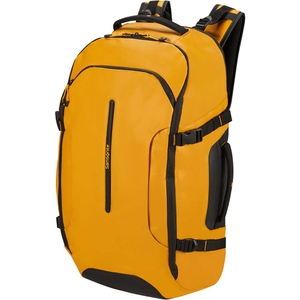
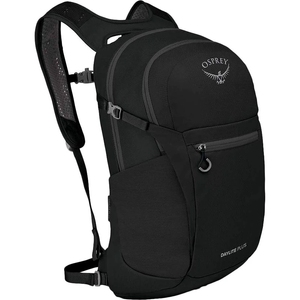
A travel or hiking backpack is needed when a regular city backpack is no longer enough. There are more things to carry, the route is longer, you spend more time on your feet, and the weight on your back should not get in the way - it should be distributed comfortably across the body.
This type of backpack is chosen for hikes, several-day getaways, active outdoor use, travel, and routes where it is not enough just to pack everything in. You also need to carry it without unnecessary strain on your shoulders. In a soft city backpack, extra weight makes itself felt quickly: your shoulders get tired, the backpack pulls backward, and things press against each other and shift inside.
Travel and hiking backpacks work differently. Here, capacity matters, but fit matters just as much. A comfortable back panel, soft shoulder straps, a chest strap, and a waist belt help distribute the weight between the shoulders, back, and hips. That is why even a fully loaded backpack feels more stable, especially when you need to carry it for several hours rather than just ten minutes.
The difference is especially noticeable in motion. On a trail, on an uphill section, during a long route, while changing transport, or simply on a long road, the backpack should not swing around, pull you backward, or interfere with your step. It should sit predictably on your back, so you can think about the route instead of adjusting the straps again and again.
Volume is best chosen according to the real task. For walks, short trips, and weekend hikes, models of around 30–50 liters are often enough. If you need to take more clothes, gear, or several days’ worth of things, it is better to look at larger travel backpacks. The longer the route and the heavier the load, the more important the back support system becomes.
Internal organization also affects comfort. On the road, you do not want to unpack the whole backpack every time you need a rain cover, a snack, documents, a bottle, or a charger. That is why extra pockets, clear separation, quick access to small items, and space for things you may need on the move are useful.
At the same time, a travel backpack does not have to be huge or complicated. There are lighter models for active days, trips, and weekend hikes. There are also larger options for long routes, travel, and a bigger set of things. The main point is not to choose “the biggest” backpack, but the one that matches your scenario, load, and the length of the road.
A travel or hiking backpack differs from a city backpack not only in volume. What matters more here is how it sits on your back, how it carries the load, whether it puts pressure on your shoulders, and whether it stays comfortable during long movement. A good fit becomes especially noticeable closer to the end of the day, when even a little extra weight starts to matter.
At Koffer.UA, you can choose travel and hiking backpacks for short getaways, active outdoor use, travel, and long routes. Focus on volume, fit, and the back support system: a day walk, a weekend hike, a trip with more things, or a route where the backpack will stay with you for several hours in a row.