
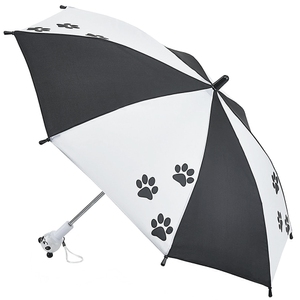


|
Quantity
|
Price
|
||
|
|
|||
|
|
|||
Choose a children's umbrella as a tool made for a child, not simply as a smaller adult model. A child should be able to hold it steadily, see the route beneath the canopy and operate the mechanism without help. Color and prints therefore come after weight, size and construction.
First check whether the child can use it independently
An umbrella can appear light in the specifications yet feel awkward for a particular child. Handle thickness, the force needed to open it and the height at which it must be held all matter. The children's models currently available from Koffer.UA open and close manually. This gives the user control over the movement, but the smoothness of the runner and any pinch-protection feature should be checked in the individual product details.
The first trial is best done at home. The child should open the umbrella, lock the canopy, close it and put it away several times without rushing. If fingers repeatedly move close to working parts or an adult must engage the lock, the model is not yet suitable for independent use.
Full-length and folding umbrellas suit different routines
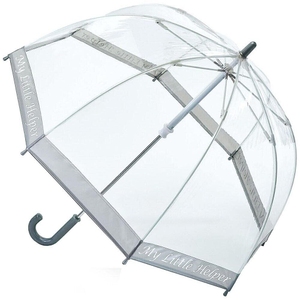
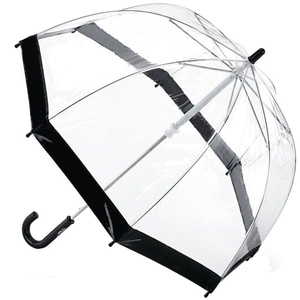
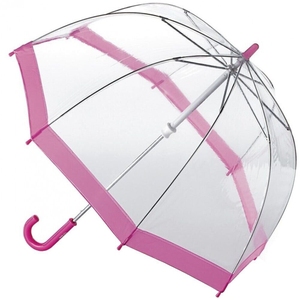
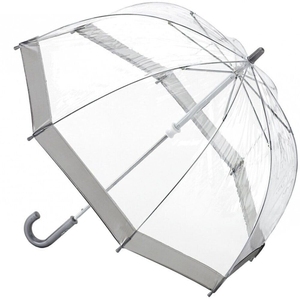
A full-length umbrella has a simpler structure and remains ready to carry at its complete length. It works well for walks with an adult, while a deep clear canopy can cover the head and shoulders without blocking the view. A folding design takes far less room in a school backpack, although the child must close the canopy, collapse the shaft carefully and store the wet umbrella in its sleeve.
For a short walk with a younger child, the full-length format is often easier to understand. For an independent school journey, compact storage may matter more once the child can operate the mechanism confidently.
The canopy should not block the child's view
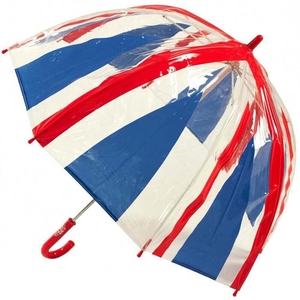
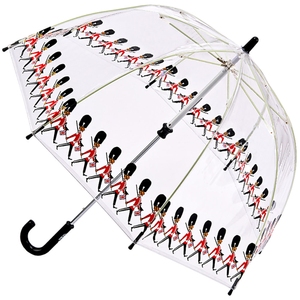
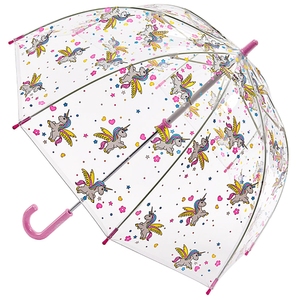
A wider canopy gives more rain coverage, but it does not automatically make a children's umbrella easier to use. An oversized canopy is harder to control in a crowd or a gust of wind. Clear panels help the child see ahead when the umbrella is held low, while reflective edging improves visibility in dull weather. Reflective details are useful, but they do not replace care near traffic.
The design also affects whether the umbrella gets used
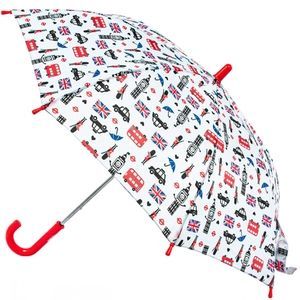
Let the child help choose the color or print after an adult has removed options that are unsuitable in weight or operation. Design then supports practical use rather than replacing it: children are more likely to carry an umbrella they enjoy and less likely to leave it behind after the rain.