




|
Quantity
|
Price
|
||
|
|
|||
|
|
|||
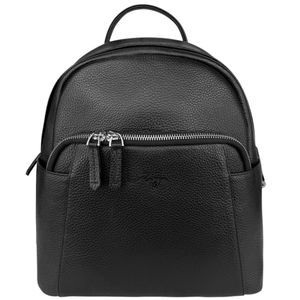
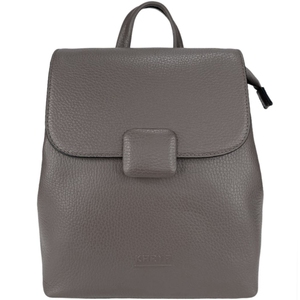
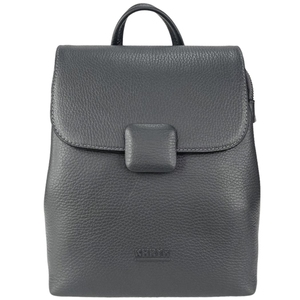
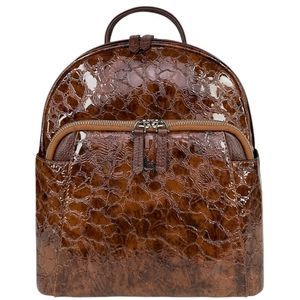
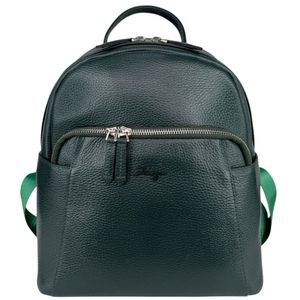
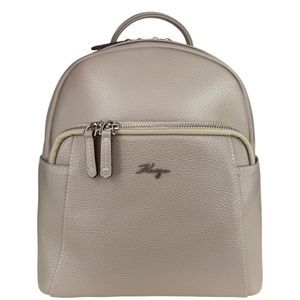
Karya backpacks usually make sense not from photos, but once you actually hold one. Empty, they don’t stand upright like a box. The leather feels soft, slightly flexible, and the shape is alive. This isn’t about rigid construction. It’s more of a calm, city format where the bag adapts to what’s inside, rather than forcing it into shape. That’s typical for leather backpacks without a frame.
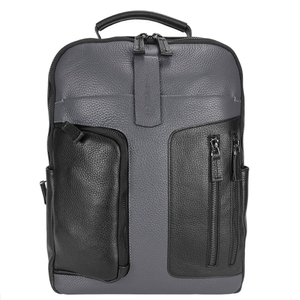
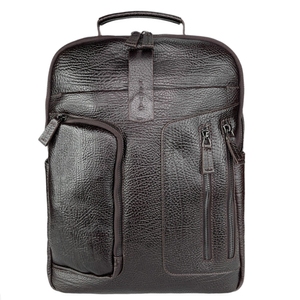
In everyday use, this shows up quickly. You open it, and it’s not just one empty space. There’s a basic layout for documents, small items, and sometimes a tablet or a laptop. In simpler models, everything is minimal: one compartment, a couple of pockets, straightforward zippers. In larger ones, the structure becomes clearer: two sections, room for A4, side pockets, sometimes a luggage sleeve. It works for a normal day, just without the feeling of an all-in-one backpack.
The differences between models are noticeable. Compact women’s backpacks feel light and soft, a bit relaxed in shape. Once filled, they take on volume but lose that clean outline. More functional men’s models feel denser, more organized inside, and things stay in place better. You notice it right away, even just opening them up.
Under load, it’s pretty straightforward. There’s no rigid back panel, no real support system. The straps are soft, but without a strong structure. For everyday city use, that’s fine. Add more weight, and the backpack simply carries your things; it doesn’t help you carry them. That’s expected for this type of design.
With laptops, it’s simple. In some models, it’s just a basic sleeve without clear bottom protection. In others, it’s a bit more thought-through. But overall, this isn’t about protecting tech. It’s more about having a place to put your laptop so you don’t have to carry it by hand.
The leather itself is a separate point. It looks calmer than textile, but it behaves differently. Over time, signs of use appear, and the surface changes. That’s normal for leather. If you expect it to stay looking new for a long time, that may not quite match reality.
Karya makes sense if what you want is a leather city backpack. Something for work, daily use, documents, and everyday items. No extra complexity, no overloaded feature set.
If you need a backpack for frequent travel, heavy loads, daily laptop carry, and rain protection, it’s better to look at more technical brands. The approach here is different.
For comparison, Wenger backpacks usually feel more structured and built around load and laptop use. Victorinox follows a similar idea, with more focus on internal organization and tech protection. Karya, next to them, feels softer and simpler. It’s clearly a leather city format.
One more thing. It’s not a good idea to treat all models the same. Within Karya, there are very simple backpacks and more thought-out ones. So the overall experience depends a lot on the specific model, not just the brand.