

|
Quantity
|
Price
|
||
|
|
|||
|
|
|||
A wind-resistant umbrella is worth considering if your regular umbrellas are often turned inside out by gusts or you frequently use an umbrella in windy weather. This type of construction helps the frame cope with sudden loads and reduces the risk of damage to the ribs and joints.
“Wind-resistant” does not mean that an umbrella can never turn inside out or break. It means the construction is designed to cope better with gusts and, in some cases, return to its normal shape after being deformed.
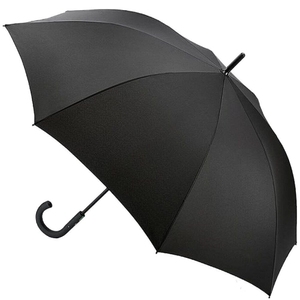
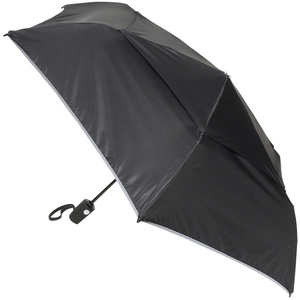
An umbrella with a wind-resistant system can be either a folding model or a walking umbrella. It may also be automatic, semi-automatic or manual – the opening mechanism itself does not determine how well the umbrella handles wind.
How a wind-resistant umbrella works
Wind-resistant systems vary from one model to another. Some use flexible ribs and reinforced joints that bend under load instead of breaking during a strong gust.
Certain umbrellas are designed to turn inside out without immediately being damaged. They can then be returned to their normal position in the way specified by the manufacturer. If a model has this feature, it should be stated in its specifications.
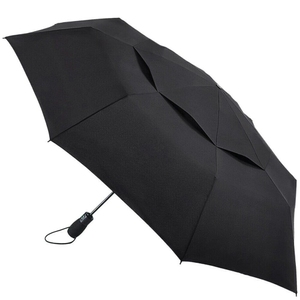
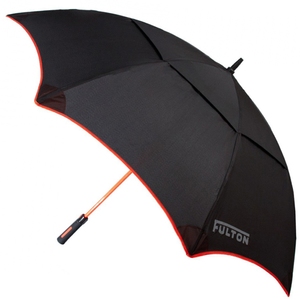
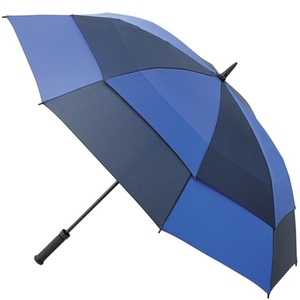
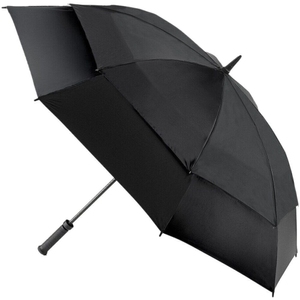
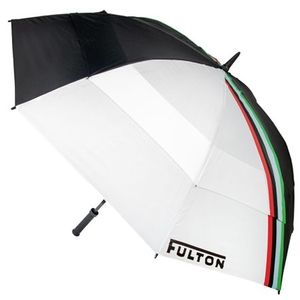
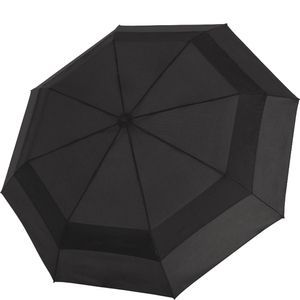
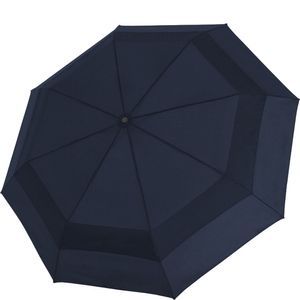
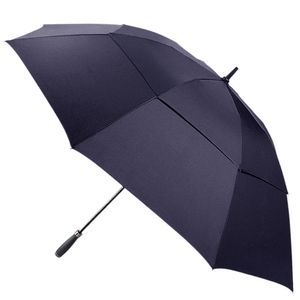
Another option is a double or vented canopy. Part of the airflow passes between the layers of fabric, reducing pressure on the canopy and frame.
Some models also have their wind resistance tested in a wind tunnel. Any wind speed stated by the manufacturer applies only to the specific model that was actually tested.
What to look for when choosing a wind-resistant umbrella
The number of ribs alone does not determine how strong an umbrella is. A model with 10 or 16 ribs is not necessarily more wind-resistant than one with 6 or 8. The frame material, rib flexibility, joint construction and the way the umbrella behaves in a sudden gust are more important.
The wind-resistant system should also not be confused with the opening mechanism. For example, an “automatic wind-resistant umbrella” combines two separate features: the automatic mechanism controls opening and closing of the canopy, while the wind-resistant construction determines how the umbrella behaves under load.
Canopy size matters as well. A larger umbrella provides more coverage for your shoulders, clothing and bag, but it also catches more wind. A compact folding umbrella is easier to carry every day, although a smaller size does not automatically make the frame stronger.
Start by checking what the manufacturer says about the frame and how the umbrella is designed to behave in gusty conditions. You can then choose the canopy diameter, folded length, weight and opening mechanism that suit you best.
Which wind-resistant umbrella should you choose?
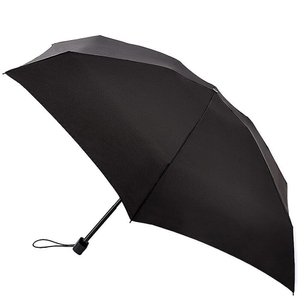
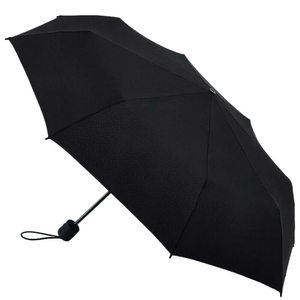
For everyday city use, folding umbrellas are often the most practical because they are easier to carry in a bag or backpack. Look for a wind-resistant construction and flexible frame components.
If you regularly use an umbrella in exposed areas where gusts are stronger, pay closer attention to the technical specifications. Look for flexible frame components, recovery after inversion, a vented canopy or manufacturer wind-test results.
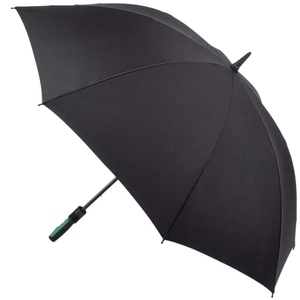
A larger canopy is useful if you want more coverage for your shoulders, clothing or bag. Walking umbrellas and larger models usually provide more protection from rain, but their greater surface area also catches more wind.
Choose an automatic, semi-automatic or manual umbrella according to the opening method you find most convenient for everyday use. Wind resistance should be evaluated separately.
A “wind-resistant” label on its own is not enough. Check what the manufacturer says about the frame and its behaviour in gusts, then choose the size, weight and opening mechanism according to your everyday needs.