






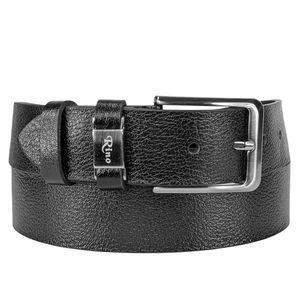

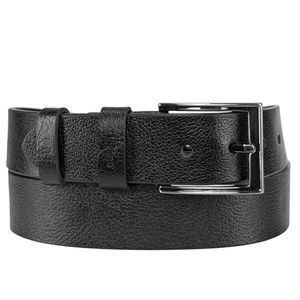


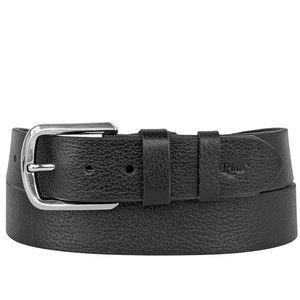
|
Quantity
|
Price
|
||
|
|
|||
|
|
|||
Leather and buckle design are easy to judge at a glance, but the most common belt problem is fit. A strap that is too short fastens at the last hole, while an oversized one leaves an awkwardly long tail. Either way, the accessory looks less deliberate and becomes less comfortable in everyday wear.
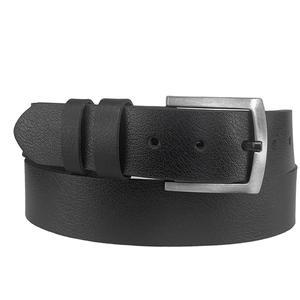
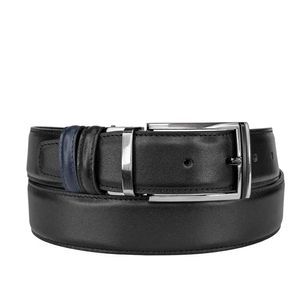
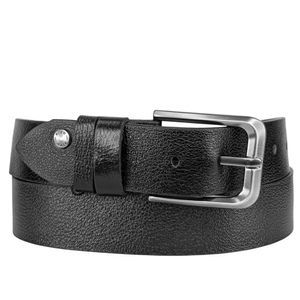
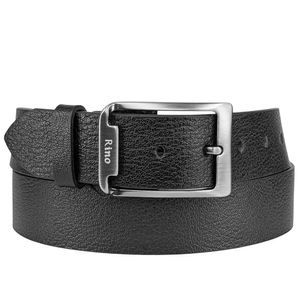
When buying a men's leather belt, begin with size and purpose rather than appearance. Most models in the Koffer.UA range are made of genuine leather for trousers or jeans. Filters for type, length, width and texture narrow the options, but the measurements should still be compared with a belt that already fits or with the trousers you plan to wear.
Belt size is not the full strap length
The number in a product specification may refer to the working length, the distance to the centre hole or another measurement chosen by the manufacturer. The full leather strap will be longer. As a result, the same number used by different brands does not always guarantee the same fit. Follow the product's measurement diagram whenever one is provided.
The most reliable starting point is a belt you already wear comfortably. Lay it flat without stretching it and measure from the point where the strap meets the buckle to the hole you use most often. Compare that value with the measurement in the product card. Measuring only from the outer edge of the buckle to the tip is less precise because buckle size, tail length and hole placement vary between designs.
A belt offers the most useful adjustment range when the prong sits in the centre hole. This leaves room for small changes in waist size and for trousers with a different rise. The size printed on jeans or trousers is only a starting point: the actual circumference depends on the cut and on where the belt sits on your body.
For a gift, use the working length of the recipient's usual belt instead of relying on a clothing size. If that measurement is unavailable, ask how the specific model has been sized. This matters most when comparing products from different manufacturers.
Let the clothes guide the choice between dress and jeans styles
A classic men's belt is intended for tailored and everyday trousers. It generally has a more restrained profile and a neat metal buckle that does not compete with shoes or other leather accessories. In a business wardrobe, balanced proportions and a subtle texture matter more than prominent decoration.
A belt for jeans can have more visual weight. A broader strap and stronger texture suit dense denim and larger belt loops. The same style can work with chinos, cargo trousers or other casual clothing, provided that the strap fits the loops and the buckle remains in proportion.
Classifying belts as dress or jeans styles is a useful filter, not a strict rule. A versatile design can work across several outfits when its width, texture and buckle shape suit the clothing. After selecting a type, open the specifications and check the actual measurements.
Match the strap width to the belt loops
Before ordering, measure the inside width of the loops on the trousers you intend to wear. The strap should pass through freely without rubbing the edges or deforming the leather. A little clearance is more practical than an exact millimetre-for-millimetre match, especially when the loops are thick or heavily stitched.
Width also changes the overall impression. A narrower belt is usually easier to integrate into a formal outfit, while a wider one balances jeans and casual clothing. Koffer.UA product cards list width separately, so this choice can be based on a measurable specification rather than on the photograph alone.
Texture does not replace a construction check
Smooth, grained, embossed, perforated and woven surfaces each give a belt a different character. Smooth leather tends to look more formal, pronounced grain makes the accessory more visible, and perforation or weaving adds visual movement. These differences help match a belt to a wardrobe, but they do not determine durability on their own.
The range includes seamless-looking designs and belts with visible stitching. These labels describe construction rather than a universal quality scale: no visible seam does not prove that a strap uses one solid layer, and stitching does not automatically make every belt stronger. Use the description and photographs to assess the material, edge finishing, flexibility and hardware of the individual product.
For frequent wear, check whether the buckle is easy to fasten and does not place unnecessary stress on the strap. A belt reserved for occasional business outfits may put more emphasis on a restrained profile. One accessory does not have to perform both jobs equally well.
When a leather belt can be shortened
On some leather belts, the buckle can be removed, the strap shortened at the attachment end and the hardware refitted. This option is mentioned for individual products and should not be assumed across the entire range. Check the fastening construction before ordering, particularly if you are considering a larger size as a precaution.
Adding a hole and properly shortening a belt solve different problems. A new hole changes the fastening point but leaves the extra tail in place. Shortening preserves the relationship between the holes and the tip, yet it requires careful work around the buckle attachment. Altering an unsuitable construction can damage the leather or fastening.
A well-fitted men's belt fastens near the centre hole, passes through the loops without force and leaves a neat tail held by the first loop. Once these three conditions have been checked before purchase, texture and detailing become matters of personal style rather than ways to disguise an incorrect fit.