


|
Quantity
|
Price
|
||
|
|
|||
|
|
|||
Tony Perotti briefcases differ not only in layout but also in the way genuine leather functions within the construction. The range includes formal structured cases alongside softer briefcase bags. This creates a meaningful choice: retain a defined shape for documents and a business look, or gain a more flexible body for a changing daily load.
Here, leather does more than shape the appearance
Tony Perotti works mainly with Italian Vera Pella leather and emphasizes vegetable tanning. This treatment preserves the material’s natural grain, so the surface is not perfectly uniform from one item to another. Over time, the leather develops its own character, and subtle changes become part of its appearance. For someone who expects a completely even texture without natural markings, this feature may matter less than the strict geometry of the briefcase itself.
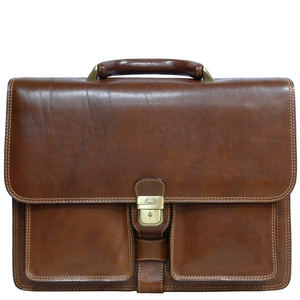
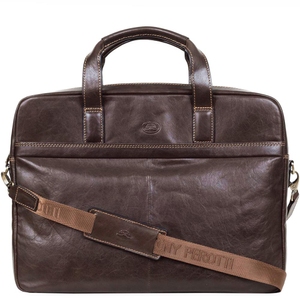
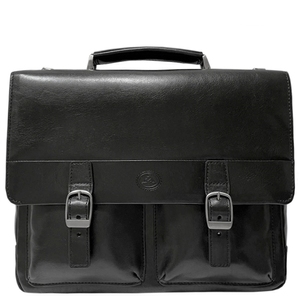
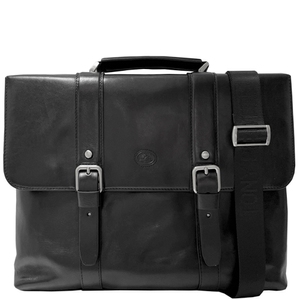
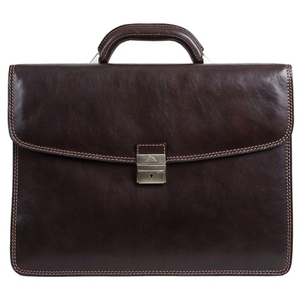
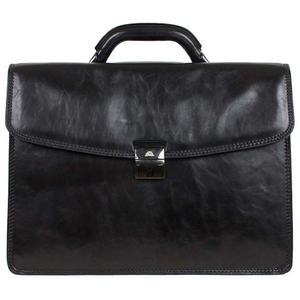
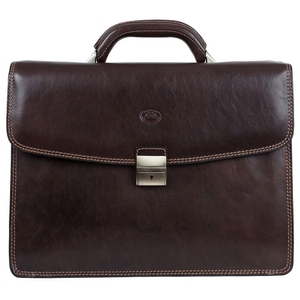
Two directions in the Koffer.UA range show this logic particularly clearly. The Italico collection is dominated by briefcases made from stiffer leather, with a structured body, flap and locks, or a zipped closure. Contatto and New Contatto use soft calf leather and a briefcase-bag construction. The distinction is not simply a matter of collection design. The leather determines how firmly the body retains its shape and how it responds to different loads.
Structured and soft bodies serve different purposes
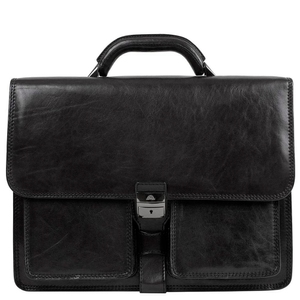
A structured Tony Perotti briefcase retains its defined outline whether it is fully loaded or not. This format works well for papers, folders, and items that benefit from an orderly space. Interior layouts include two compartments, pockets for documents, a phone and business essentials, and pen holders. A flap with a lock closes the main compartment and maintains the briefcase’s classic character.
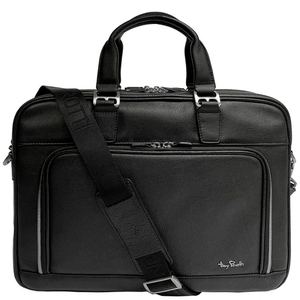
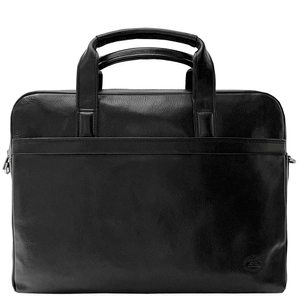
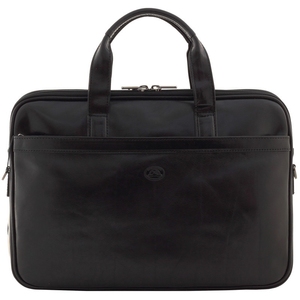
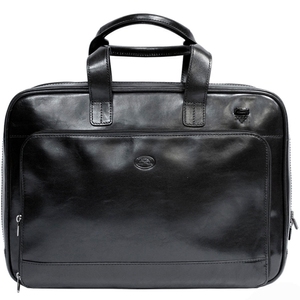
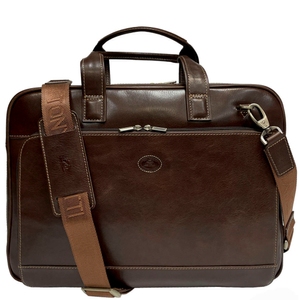
A soft briefcase bag is designed for a different pace of use. It adapts more easily to its contents, can be carried by two handles or on a removable shoulder strap, and feels less formal. Several independent compartments separate documents, devices, and small accessories. Some models provide a laptop pocket, but its size should be checked against both the screen size and the device’s actual dimensions.
Start with the level of structure you need rather than the color or number of pockets. A structured Tony Perotti model makes more sense for a consistent set of documents and a formal business setting. A soft format with a shoulder strap suits travelling around the city, working away from the office, and carrying a changing load. The internal layout comes next: one or two main compartments, space for a laptop, the closure type, and quick access to smaller items.