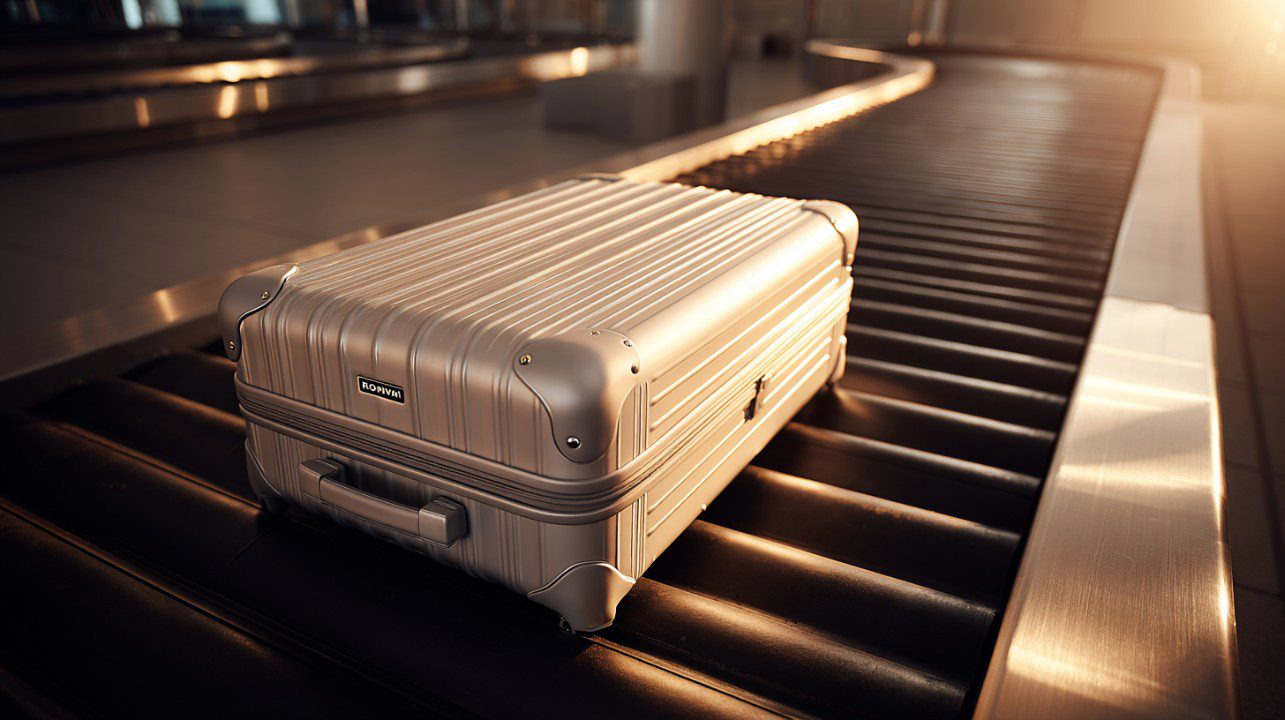
It is a familiar airport scene: one suitcase heads onto the baggage belt exactly as it is, while the next is sealed under several layers of clear plastic. For many travellers, wrapping a suitcase has become almost part of the pre-flight routine. But is it actually necessary?
The short answer is no, you do not have to wrap your suitcase in plastic.
A suitcase in good condition can travel perfectly well without any extra covering. Plastic wrap can be useful if you want to preserve its appearance, keep dirt and light scratches off the surface, or add a little extra security around the closed case. What it will not do is protect a wheel, handle or shell from a hard impact.
So before reaching for a roll of stretch film, it is worth asking a simpler question: what exactly are you trying to protect your suitcase from?
Why do people wrap suitcases in plastic?
Once your suitcase disappears behind the check-in desk, it begins the part of the journey you no longer control: conveyor belts, baggage carts, sorting systems, loading and unloading, and close contact with dozens of other bags.
A few scuffs and marks are simply part of normal luggage wear. Plastic wrap takes some of that contact instead of the suitcase itself.
To reduce scratches and scuffs. This can be especially useful with a new suitcase or a smooth, glossy shell where even a small mark is easy to notice.
To keep dirt off the surface. A dusty baggage belt, wet floor or less-than-gentle handling is more likely to leave its mark on the wrapping than on the suitcase itself. This is especially useful for fabric suitcases, as the material is usually more difficult to clean after a trip.
To reduce brief exposure to moisture. If your luggage spends a short time in the rain, a wrapped surface will have an extra layer of protection. It does not make the suitcase waterproof, though. Water can still reach areas around the handles, wheels and other openings.
To add extra reinforcement around the case. If a zipper unexpectedly comes apart, several tightly wrapped layers may help keep the suitcase from opening immediately. For the same purpose, you can use a luggage strap – it offers very little surface protection, but is designed specifically to provide extra reinforcement around the suitcase.
There is another small advantage: it is harder to open a wrapped suitcase without leaving obvious signs. The plastic has to be cut or visibly damaged. Still, it should not be treated as serious theft protection.
What plastic wrap will not protect against
Plastic wrap has a fairly narrow job: it protects the surface, not the structure of the suitcase.
If a hard impact lands on a wheel, telescopic handle or corner of the shell, a few layers of plastic will make little difference. The same applies to heavy compression or a bad fall.
A damaged zipper, loose wheel or sticking handle is therefore not a reason to add more wrap. It is a reason to repair the suitcase before travelling.
If your main concern is serious damage in transit, the quality and condition of the suitcase itself matter far more than the number of layers around it.
When wrapping your suitcase actually makes sense
There is no universal rule, but there are a few situations where the decision is fairly straightforward.
| Situation | Is plastic wrap worth it? |
|---|---|
| The suitcase is new and you want to keep it looking that way | Yes, it can be worthwhile |
| The shell is smooth or glossy | Useful if visible scratches bother you |
| The suitcase is made of fabric | Can help with dirt and short exposure to moisture |
| The suitcase has already seen plenty of trips and more scuffs do not matter | You can comfortably skip it |
| You want a little extra reinforcement around the closed case | Plastic wrap can help |
| You already use a properly fitted suitcase cover | Extra wrapping is usually unnecessary |
| Your main concern is damage to the wheels or handle | Plastic wrap will do very little |
| The zipper or shell is already damaged | Repair it before heading to the airport |
In other words, wrapping a brand-new suitcase can be a perfectly reasonable precaution. For an old travelling companion that has already seen its share of airports, it is more a matter of personal preference.
There are inconveniences too. Plastic wrap is single-use: once the trip is over, it is removed and thrown away. And if you suddenly need something from the suitcase after wrapping it, that neat transparent cocoon has to be cut open.
Do you have to wrap your suitcase at the airport?
Plastic wrapping is not a universal requirement for air travel. An ordinary suitcase in good condition can generally be checked without it, provided it meets the airline’s requirements for size, weight and packaging.
Airlines can, however, set their own rules. And there is an important detail here: not every DIY wrapping method is automatically acceptable.
Please note: KLM warns that it may refuse baggage if the packaging could damage or block the baggage-handling system. The airline specifically mentions suitcases wrapped in household cling film. Professional sealing is allowed as long as the baggage can still be handled normally.
So if you plan to wrap your suitcase at home, check the rules of the airline you are actually flying with. The film should fit tightly around the case, with no loose edges that could catch on equipment.
There is another point worth remembering: wrapping does not bypass security screening. Most checked baggage can be screened without being opened, but in some cases a physical inspection is required. TSA, for example, explicitly includes physical inspection as part of the screening process for some bags.
If security staff need to open the suitcase, the outer wrapping may have to be disturbed. Plastic film should never be treated as a barrier to security checks.
Plastic wrap or a suitcase cover?
If your main goal is to protect the surface from dirt, light scratches and scuffs, a reusable suitcase cover is the most obvious alternative to plastic wrap.
The difference is mostly about how often you travel.
Plastic wrap works well as a one-off solution. Wrap the suitcase before the trip, arrive, remove the film.
A suitcase cover is designed for repeated use. You can put it on before a flight, take it off after collecting your luggage and use it again on the next trip. There is no need to buy fresh wrap every time or find a wrapping station at the airport.
There is also a small practical bonus: a bright or distinctive cover makes your suitcase easier to spot among a row of similar bags on the carousel.
That does not mean plastic wrap loses the comparison completely. It covers the surface more closely and also adds a little extra reinforcement around the case. If you only fly occasionally, it may be all you need.
The simple rule is this: for occasional trips, plastic wrap is a perfectly reasonable one-off option; for frequent travel, a reusable suitcase cover is usually more practical.
Just make sure the cover is the right size so it fits closely and does not shift around during handling.
If you decide to wrap the suitcase yourself
There is no complicated technique involved. The film should sit tightly against the suitcase, leave the wheels uncovered and have no loose edges hanging off the case.
Keep the main handle accessible. Once the bag has been checked, make sure the baggage tag is securely attached and easy to see.
And before turning your suitcase into a transparent cocoon at home, check your airline’s baggage rules one more time. Packaging requirements can vary between carriers.
So, should you wrap your suitcase or not?
You can, but you certainly do not have to.
Plastic wrap is useful if you want to protect a new suitcase from dirt, minor scratches and scuffs, or give the closed case a little extra reinforcement before the flight.
It does not make the suitcase stronger, though, and it offers very little protection against serious impacts to the wheels, handles or shell.
If you travel only occasionally, plastic wrap remains a simple and practical option. If your suitcase flies with you several times a year, a reusable cover is usually more convenient.
And if ordinary signs of travel do not bother you at all, simply close the suitcase and send it onto the baggage belt. After all, that is what it was made for.